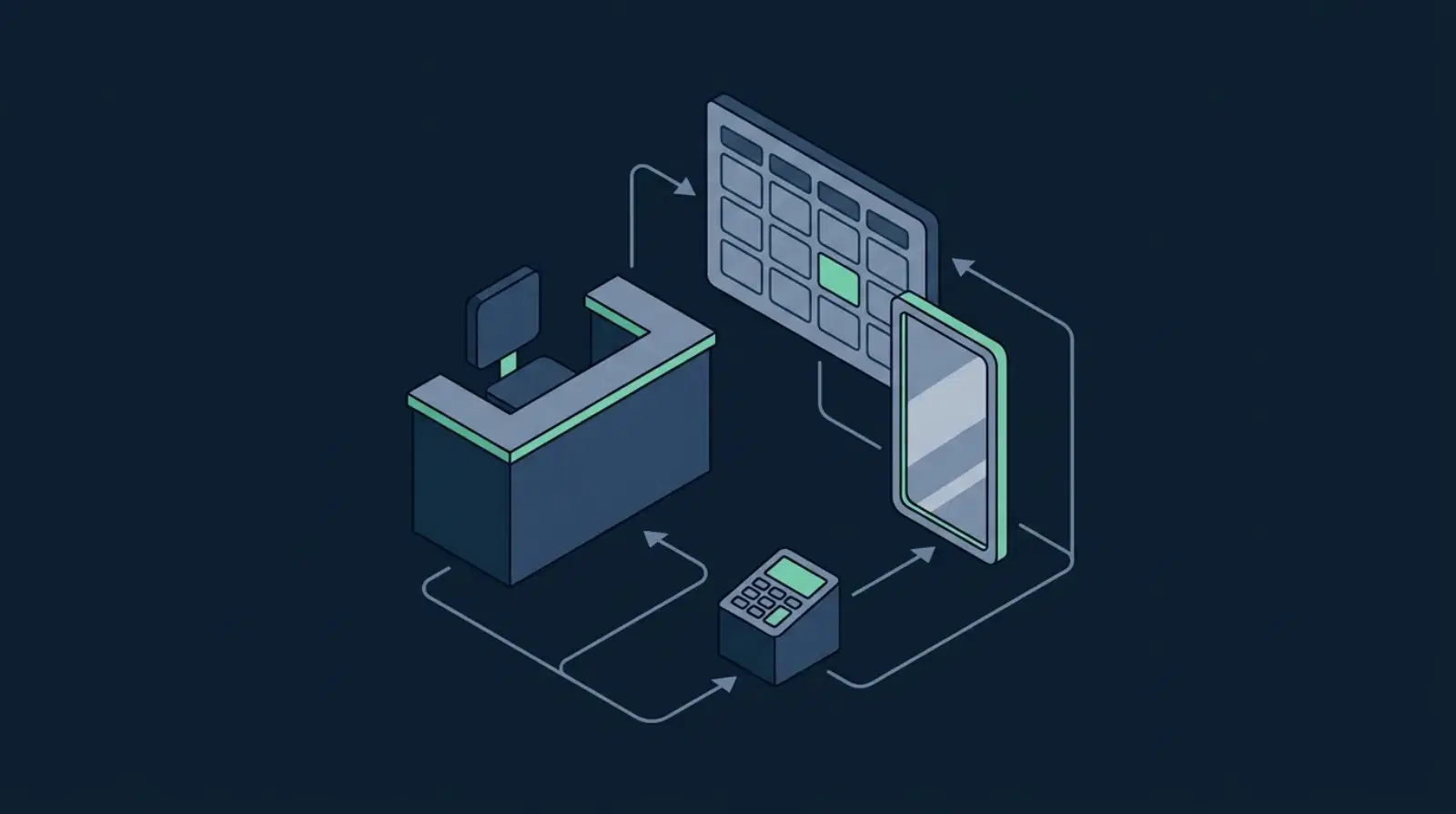
AI booking automation for a salon answers enquiries and books appointments 24/7 across phone, SMS, Instagram, and Facebook, then runs confirmations and no-show reminders on its own. It plugs into the booking system you already use. Most Australian salons cut no-shows and stop losing the after-hours enquiries that currently go to voicemail.
What admin is eating your salon's chair time?
Run a hair or beauty salon in Australia and you already know where the day goes. It isn't the cutting, colouring, or treatments — that's the part you trained for. It's everything wrapped around it: the texts at 9pm asking "are you free Saturday?", the missed call during a balayage you couldn't stop for, the half-hour after close spent confirming tomorrow's bookings one by one, and the slow drip of no-shows that leave a $180 chair sitting empty.
For most owner-operated salons, this front-desk admin is a second unpaid job. And it's the exact work AI booking automation is built to take off your plate.
What does AI booking automation mean for a salon?
Forget the buzzwords. For a salon, AI booking automation is a handful of very specific, very boring jobs handled automatically so a human doesn't have to:
- Answering booking enquiries 24/7 — across your Instagram DMs, website chat, SMS, and after-hours calls — and offering real available slots from your calendar, not a generic "we'll get back to you".
- Confirming and reminding clients automatically, with the timing that actually reduces no-shows (a confirmation on booking, a reminder 48 hours out, a final nudge the morning of).
- Filling cancellations by texting your waitlist the moment a slot opens, so a Thursday cancellation becomes a Thursday booking instead of an empty hour.
- Rebooking — prompting a client who's due for their 6-week colour, or who left without booking their next cut, before they drift to the salon down the road.
- Triaging the weird stuff — pricing questions, allergy/patch-test queries, "do you do balayage on dark hair" — answered instantly from your own pricing and policies, and handed to a human when it's genuinely a judgement call.
If you want the broader picture of how these autonomous helpers work versus an old-school chatbot, our AI agents overview lays it out. The salon-specific version of all this lives on our hair & beauty salons page.
Which tasks are bleeding your hours and dollars?
Here are the specific jobs — because "you'll save time" is a slogan, not a number you can bank.
- Booking ping-pong. A client DMs asking for Saturday. You reply with two options. They pick one. You check it's still free. You enter it. Four touches for one booking, scattered across a day you're already on your feet.
- Manual confirmations and reminders. Tapping out reminder texts for tomorrow's column, one client at a time, after close.
- Chasing rebookings. Scrolling back through who's overdue and messaging them individually — which, honestly, most salons just never get to.
- Filling last-minute gaps. A 2pm cancels at 11am and the slot dies because you didn't have time to call around.
- Answering the same five questions about price, parking, products, and patch tests.
What is it worth to a salon in AUD?
Here's a realistic single-location salon with two stylists and a casual front-desk presence.
Front-of-house admin — confirmations, reminders, enquiry replies, rebooking chases, gap-filling — comes to roughly 8 hours per week. Whether that's a junior on the desk at $30/hour or your own time (worth far more), the cash figure is the same starting point:
8 hours/week × $30/hour × 52 weeks = $12,480/year in pure admin labour.
Now the no-shows. Say this salon does 40 bookings a week at an average ticket of $120, and — to keep the example concrete — runs a no-show rate of around 12%, which is roughly 5 empty appointments a week:
5 no-shows/week × $120 × 52 weeks = $31,200/year in lost revenue.
Suppose well-timed automated confirmations and reminders halve that — a reduction plenty of salon owners see once a client gets a nudge 48 hours out and again on the morning. Halving the loss claws back around $15,600/year.
Add the labour and the recovered revenue and you're looking at $25,000–$28,000 a year that AI booking automation can defend or hand back — for a single two-chair salon. That's before you count the bookings won simply because someone got an instant answer at 9pm instead of waiting until you saw the message at 10am the next day. Scale to three or four stylists and the numbers stop being a nice-to-have.
If you'd rather see the underlying mechanics of stitching these workflows together, our automation page covers how the pieces connect to your existing booking software.
Doesn't my booking system already do this?
Most salons do — Timely, Fresha, Square, Phorest. Those are excellent calendars. They are not, on their own, answering your Instagram DMs in plain English at midnight, deciding which waitlisted client to offer a gap to, or writing a rebooking nudge that sounds like you and not a robot.
AI booking automation sits on top of the tools you already run. It reads availability from your calendar, talks to clients across the channels they actually use, and writes bookings back. You don't rip anything out. You bolt on the judgement layer the calendar was never built to provide.
What are your privacy obligations with client data?
Salons hold more sensitive client data than owners often realise: contact details, appointment history, payment info, and sometimes health-adjacent notes (skin conditions, allergies, patch-test results, pregnancy for certain treatments). Under the Australian Privacy Act 1988 and the Australian Privacy Principles, that data carries real obligations around consent, storage, and access.
It matters where your automation processes and stores this. Grab a generic AI booking tool off the shelf and your client list is usually being handled on overseas servers by default. For an Australian salon, that's an avoidable risk. Marketing texts and reminders also sit under the Spam Act 2003 — you need consent and a clear opt-out, which a properly built system handles for you rather than leaving you exposed.
This is the bit that makes us different. Zatersio is engineer-led: you work directly with our engineering team, led by Lakitha, a software engineer with ten years' experience, not an account manager. We build with Australian data sovereignty as the default, not an upsell. Your client data stays where it should, handled by someone who can actually explain how, and we're based here — see how we work with salons and other businesses around Melbourne.
How do you start without betting the salon?
There's no need to wire up the whole front desk before you've seen it work once. Start where the leak is biggest, which for most salons is no-shows — the fix (smart confirmations and reminders) is low-risk, and the payback shows up in the appointment book inside a few weeks.
- Pick your biggest leak — usually no-shows or after-hours enquiries you're missing.
- Note which tools and channels it touches (booking software, Instagram, SMS, website).
- Roll out automation for that one workflow, tuned to your hours, prices, and tone of voice.
- Measure it over 30 days: no-show rate before and after, hours back on the desk, enquiries answered after close.
Once that's earning its keep, layer in waitlist gap-filling and rebooking. Typical automation engagements for work like this sit between $2,000 and $15,000 depending on scope — and as the worked example shows, a single salon's no-show recovery often covers that inside the first year.
Get Your Salon's Time Back
If you want to know exactly where automation would save your salon the most — in hours and in dollars — grab a free automation blueprint. We'll map your booking, reminder, and rebooking workflows and show you the highest-ROI place to start. No jargon, no handoffs — just a clear plan from the engineer-led team that would actually build it.